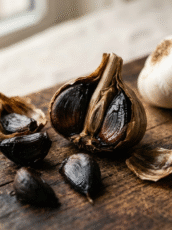
If you’ve scrolled past jars of shriveled black cloves at the farmers market or spotted “black garlic” on a restaurant menu and wondered what on earth it is, you’re not alone. Black garlic looks nothing like the papery white bulbs in your pantry, and it doesn’t taste like them either.
Black garlic is regular garlic that’s been slowly aged under heat and humidity until it turns black, soft, and sweet. No dye, smoke, or additives just time, warmth, and moisture transforming a sharp, pungent bulb into something closer to a savory dried fruit. This guide breaks down exactly what black garlic is, how it’s made, what it tastes like, and how to start cooking with it.
Summary
What Is Black Garlic, Exactly?
Black garlic starts out as ordinary raw garlic the same bulbs you’d find in any grocery store. What makes it “black” isn’t a different variety or a dye job; it’s an aging process. Whole heads or individual cloves are placed in a warm, humidity-controlled environment for several weeks, and during that time the cloves gradually darken from white to deep brown to jet black.
The result is a clove that’s soft, sticky, and chewy almost like a date with a flavor that’s rich, sweet, and savory instead of sharp and spicy. The origins of the process trace back to East Asia, where it’s been used for centuries, though it’s only become widely available in Western grocery stores and restaurants in the last couple of decades.
How Is Black Garlic Made?
Making black garlic is more about patience than technique. Producers place whole heads of garlic in an environment with tightly controlled temperature and humidity typically somewhere in the range of 140°F to 190°F with 70–90% humidity and leave them there for anywhere from two weeks to two months, depending on the method. Commercial operations often cure the garlic for four to six weeks, then let it age and dry further to help it keep.
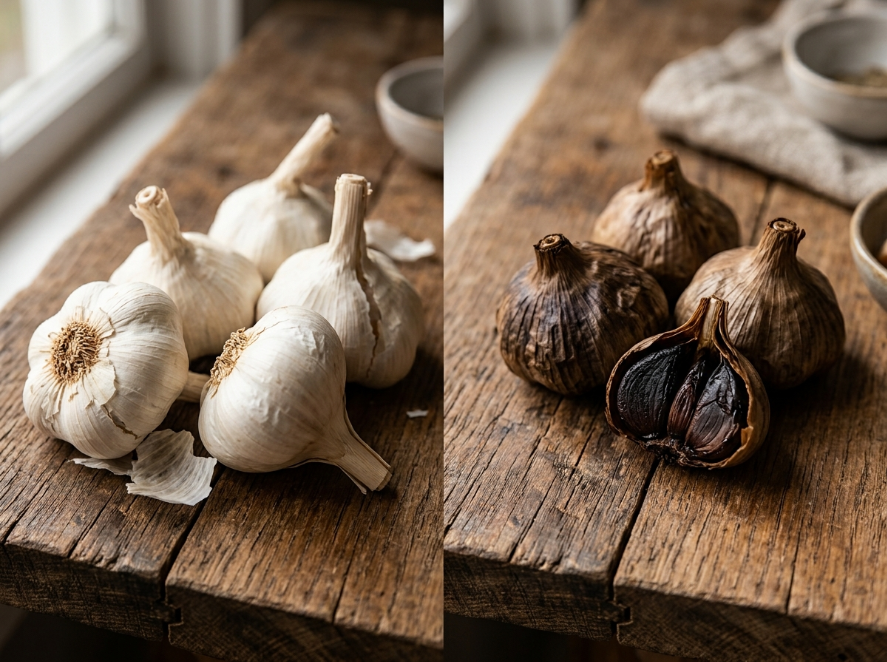
The Maillard Reaction, Explained Simply
The transformation happens because of something called the Maillard reaction the same chemical process responsible for the browning on seared steak, toasted bread, and roasted coffee beans. In garlic, sugars and amino acids react under sustained heat, breaking down the compounds responsible for raw garlic’s sharp bite and building new ones that taste deep, sweet, and umami-rich.
Is Black Garlic Fermented?
You’ll often see black garlic labeled as “fermented garlic,” but that’s technically a bit of a misnomer. True fermentation relies on microbes like yeast or bacteria to transform food. Black garlic’s transformation is primarily an enzymatic and non-microbial browning reaction no starter culture required. The “fermented” label has stuck around mostly out of habit, even though the science is a little different.
What Does Black Garlic Taste Like?
This is usually the first question people ask, and it’s hard to answer in one word. Most people describe black garlic as tasting like a cross between roasted garlic, dark caramel, molasses, and balsamic vinegar, sometimes with a faint hint of licorice or dried fruit. The aggressive, sulfurous bite of raw garlic is almost entirely gone, replaced by a deep umami sweetness.
Texture-wise, think soft and slightly sticky, similar to a dried fig or date, rather than the firm, crunchy bite of a raw or roasted clove.
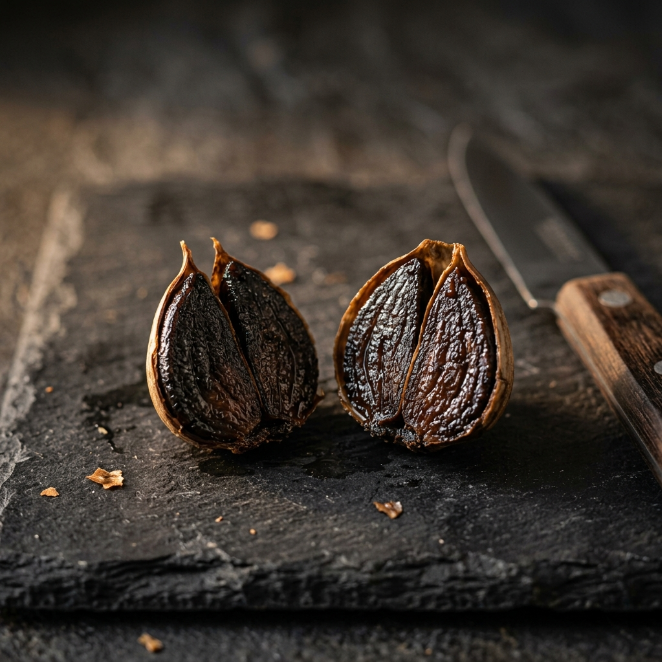
Black Garlic vs. Regular Garlic: Key Differences
| Regular Garlic | Black Garlic | |
|---|---|---|
| Color | White/cream | Deep black |
| Texture | Firm, crisp | Soft, chewy, sticky |
| Flavor | Sharp, pungent, spicy | Sweet, savory, umami |
| Smell | Strong, lingering | Mild, less “garlicky” |
| Shelf life (unopened) | Weeks | Months |
The mellower smell is one of black garlic’s biggest selling points for home cooks it comes down to a drop in allicin, the sulfur compound responsible for raw garlic’s sharp odor and “garlic breath.”
Is Black Garlic Good for You?
Like raw garlic, black garlic is often credited with health benefits, though it’s worth keeping expectations realistic it’s a flavorful ingredient, not a medical treatment. Some research points to black garlic containing higher levels of certain antioxidant compounds than raw garlic, along with polyphenols that may contribute to its aroma and depth of flavor. Early studies have looked at potential anti-inflammatory and antioxidant properties, but this is an active area of research rather than settled science, so it’s best to think of black garlic as a nutrient-dense flavor booster rather than a supplement replacement.
How to Buy and Store Black Garlic
Black garlic shows up in a few different forms, and each has its own shopping and storage rules.
Whole Heads
A whole bulb typically holds six to ten cloves. Peel away the papery skin around each one before using, and don’t toss the skins they can flavor broths or steep into tea. Look for heads that feel plump and firm. Store unopened heads in a cool, dark, dry spot, or refrigerate opened ones for up to about six months.
Peeled Cloves
Sold ready-to-use in jars, these are the most convenient option for quick cooking. Check that the cloves aren’t overly wet or sticky in the jar, and refrigerate after opening use within about three months.
Black Garlic Paste or Powder
Paste (or purée) blends easily into sauces and dressings; powder works like any other dried spice. Check labels for added oil, salt, or sweeteners if you want pure black garlic. Keep powder in a cool, dry place and use within a year for the best flavor.
How to Cook With Black Garlic (Beginner-Friendly Ideas)
Black garlic is forgiving and versatile a little goes a long way. Some easy ways to start:
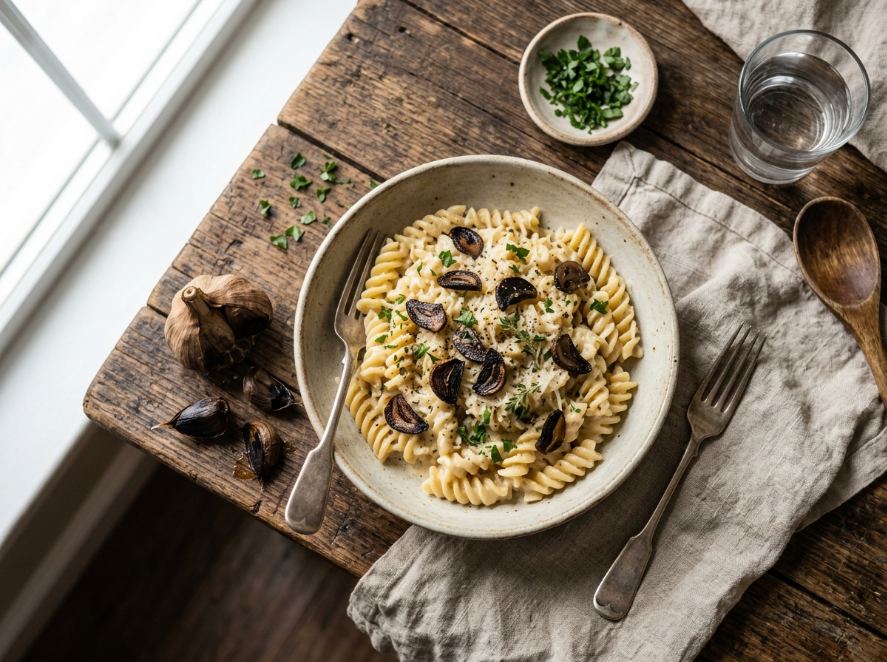
- Stir it into pasta or risotto for a deep, savory background note.
- Blend it into soups and sauces a clove or two disappears completely and adds richness.
- Mash it into hummus or dips in place of (or alongside) raw garlic.
- Whisk it into salad dressings and vinaigrettes for a subtly sweet, tangy edge.
- Spread it on toast or a burger on its own, the way you’d use a savory jam.
- Mix it into compound butter to melt over vegetables, steak, or bread.
- Add it to marinades and glazes, especially for grilled meats or tofu.
Because the cloves are soft, you can slice, dice, or mash them with just a knife no special equipment needed.
Not ready to track down black garlic yet? You can get a feel for how garlic-forward flavor works in a dish with everyday recipes like garlic butter pasta, a garlic butter shrimp and corn sheet pan dinner, or baked garlic parmesan shrimp then swap in a mashed clove or two of black garlic once you’re ready to experiment with its deeper, sweeter flavor.
Can You Make Black Garlic at Home?
Yes, though it takes commitment. Home methods typically involve holding whole heads of garlic at a low, consistent temperature (using a rice cooker, dehydrator, or slow cooker on its lowest setting) for one to several weeks. It’s a slow process, and it can make your kitchen smell strongly of garlic for the duration, so many home cooks opt for a dedicated appliance or simply buy it pre-made instead.
FAQ
Is black garlic raw or cooked?
Neither, exactly. It’s aged rather than cooked at high heat the low, sustained temperature transforms it without actually cooking it the way sautéing or roasting would.
Does black garlic taste like regular garlic?
Not really. The sharp, spicy bite of raw garlic is mostly gone, replaced by a sweet, savory, umami flavor closer to balsamic vinegar or molasses.
Can you eat black garlic straight from the bulb?
Yes. Many people eat the cloves on their own as a snack, since the flavor is mild and sweet rather than pungent.
How long does black garlic last?
Unopened whole heads can keep for months in a cool, dry place; once opened or peeled, refrigerate and use within a few months for best quality.
Where can you buy black garlic?
It’s increasingly available at specialty grocery stores, farmers markets, and larger chains, plus online retailers.
More Garlic-Forward Recipes to Try
Once you’ve got a jar of black garlic in the fridge, it’s worth having a rotation of garlicky dinners on hand to fold it into. A few favorites to start with:
- Easy lemon butter garlic salmon sheet pan dinner
- Garlic butter cod Florentine
- Parmesan garlic chicken thighs with potatoes and green beans
- One-pan roasted garlic parmesan chicken and veggies
- Cheesy garlic chicken wraps
Each of these is built around fresh garlic’s punchy flavor, so they’re a great base to experiment on as you get comfortable using black garlic’s sweeter, mellower profile in your own cooking.
Final Thoughts
Black garlic is one of those ingredients that sounds intimidating until you actually try it at which point it usually becomes a pantry staple. Whether you stir it into a weeknight pasta or spread it on toast, its sweet, umami depth makes it one of the easiest ways to add complexity to simple dishes without much effort. For more garlic recipe inspiration and ideas to pin for later, check out this Pinterest board.